 Serbia’s Climate and Energy Transition: CBAM and the Domestic Legal Framework
An E-L-C Hub round table connected the European Union Carbon Border Adjustment Mechanism with domestic fiscal instruments, institutional capacity and the legal conditions for decarbonisation.
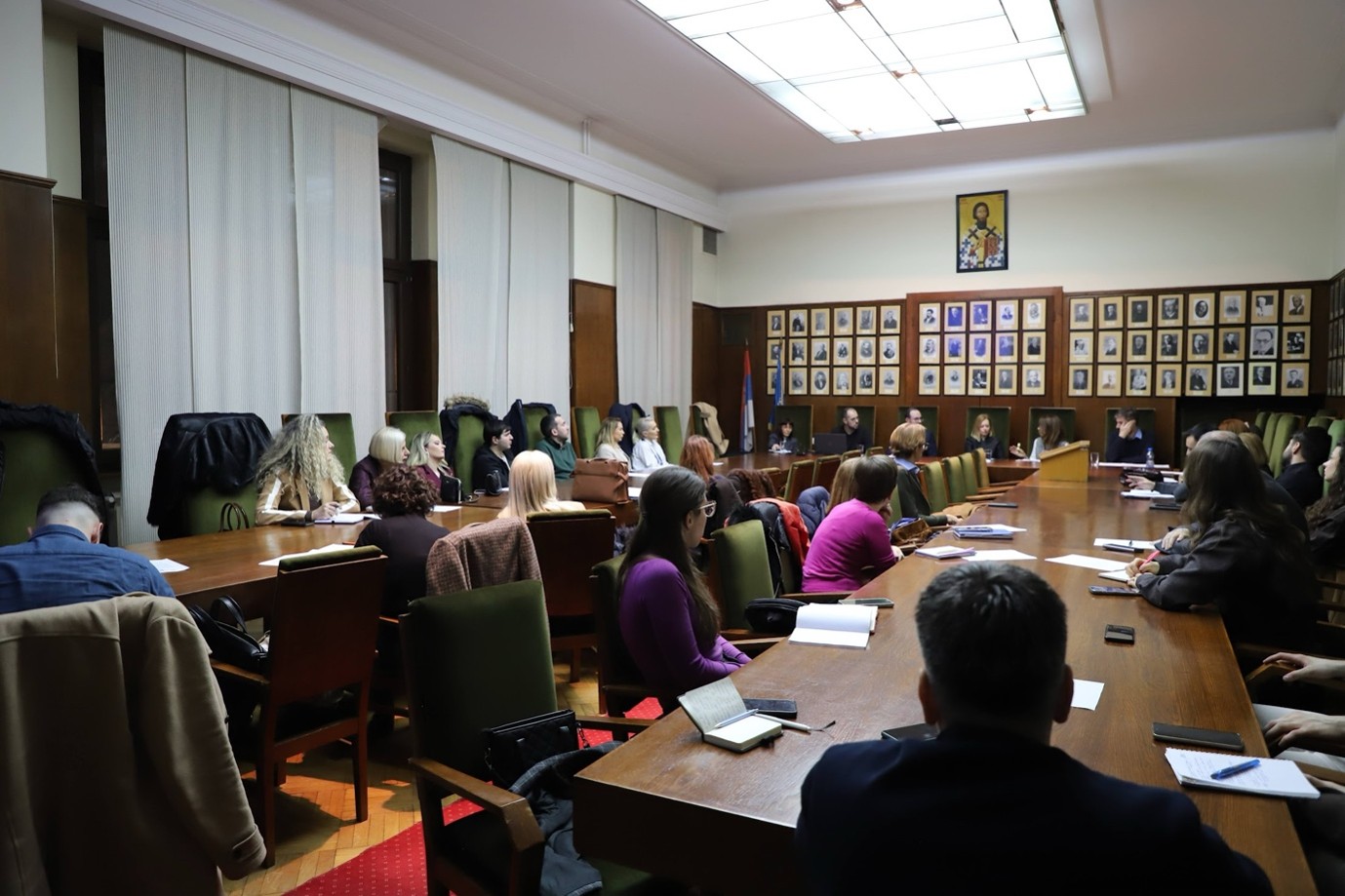
The round table “Serbia’s Climate and Energy Transition: CBAM and the Domestic Legal Framework” was held at the University of Belgrade Faculty of Law on 22 December 2025. The event was organised by the Jean Monnet Chair in European Environmental and Climate Change Law in cooperation with the OSCE Mission to Serbia, within the Environmental Law Clinic Hub (E-L-C Hub).
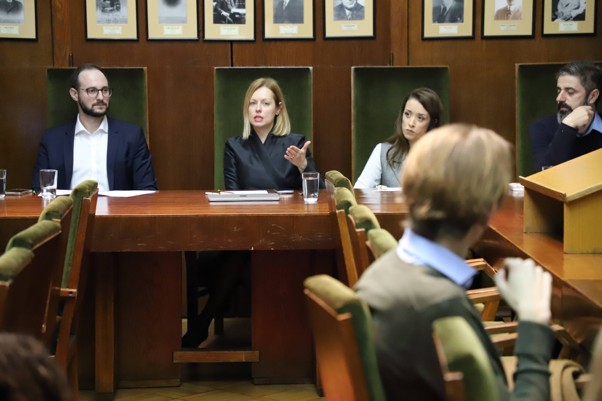
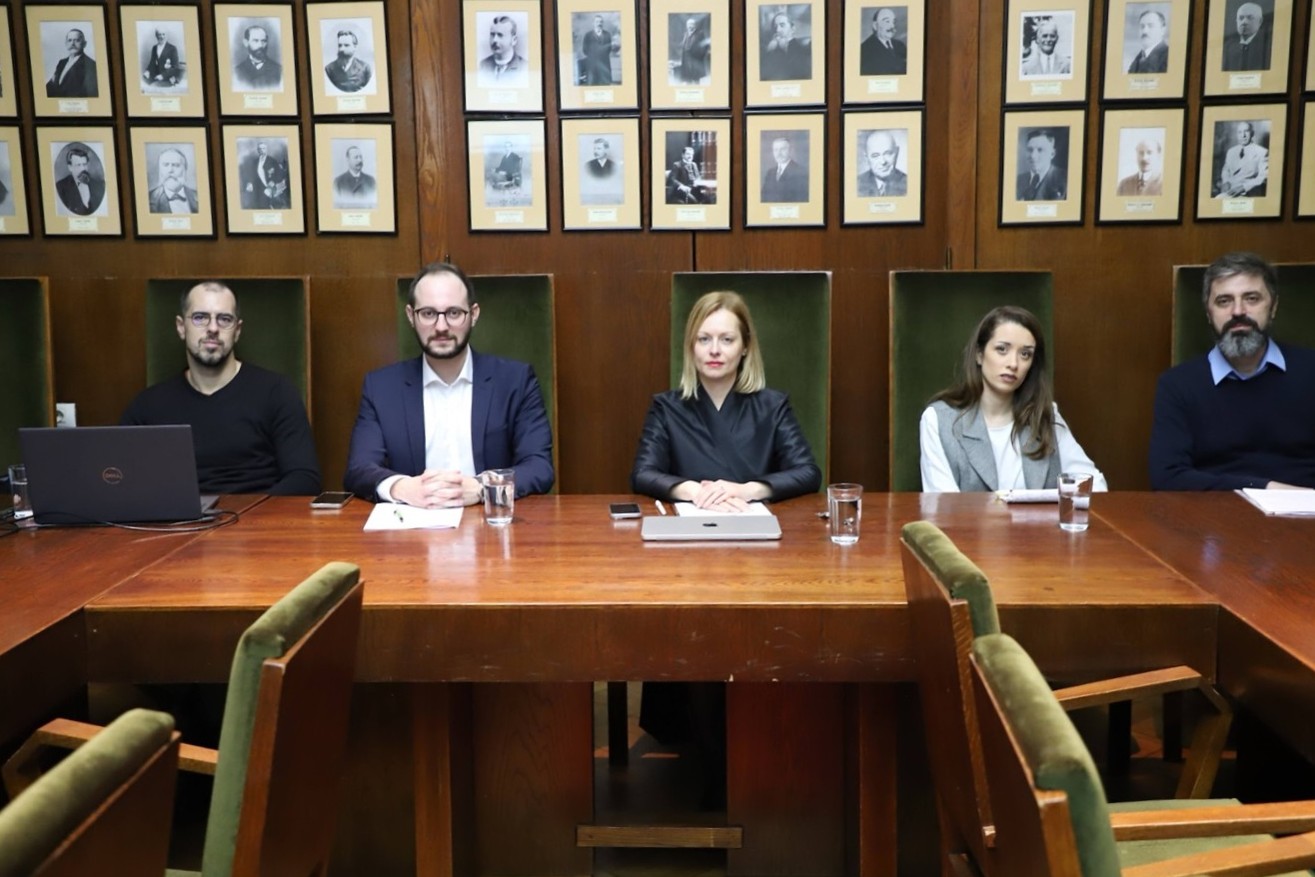
The round table was opened and moderated by Prof. Dr Mirjana Drenovak-Ivanović. The discussion involved Veljko Milošević of BDK Advokati, Miloš Kuzman, Head of the Energy and Environmental Law Group at NIS a.d. Novi Sad, Hristina Vojvodić, Senior Legal Adviser at the Platform for Social Development and Innovation (CORE), Slobodan Minić of the Fiscal Council, and Tatjana Đurković, Environmental Affairs Adviser at the OSCE Mission to Serbia. The exchange brought together perspectives from environmental and climate law, legal practice, civil society and public finance.
The discussion focused on the European Union Carbon Border Adjustment Mechanism (CBAM), which progressively applies a carbon price to emissions embedded in certain products imported into the European Union market. Participants considered its role in reducing the risk of carbon leakage and establishing comparable conditions for European Union producers and importers of carbon-intensive products. Particular attention was given to the implications of CBAM for Serbian exporters, industrial policy, the energy transition and alignment with European Union climate law.
The participants analysed the Law on Tax on Greenhouse Gas Emissions and the Law on Tax on Imports of Carbon-Intensive Products as the beginning of a domestic framework of fiscal instruments for carbon pricing and the promotion of decarbonisation. The discussion examined the relationship between these laws and CBAM, as well as the importance of a domestic carbon price for the position of Serbian companies in the European Union market.
The round table addressed the legal and institutional conditions for implementing the new legislation, including the determination and monitoring of emissions, reporting, verification of submitted data and the allocation of competences among the responsible authorities. The participants also considered the possible effects of the new fiscal obligations on economic competitiveness, the need for technological adjustment and the importance of a predictable regulatory framework for planning investments in decarbonisation.
The closing discussion emphasised that Serbia’s response to CBAM should not be limited to introducing new tax obligations. An effective climate and energy transition requires a coherent legal framework connecting environmental and climate law, energy policy, fiscal instruments, international trade and sustainable-business standards. Within the E-L-C Hub, the round table enabled academic, legal-practice, civil-society and institutional perspectives to be brought together in examining current decarbonisation challenges.