Bridging Law, Technology and Sustainability: Guest Lectures within Legal Tech
The series of lectures and workshops connected practical use of AI tools with professional responsibility and the relationship between the digital and green transitions.
A series of guest lectures and practical workshops on artificial intelligence in legal education and practice was held at the University of Belgrade Faculty of Law during April and May 2026 as part of the activities that contributed to the development and delivery of “Digital Skills for Lawyers – Legal Tech”. The programme involved Tamara Zavišić, a lawyer and AI consultant specialising in the regulatory, ethical and governance aspects of artificial intelligence, as well as Marija Veselinović and Nada Matković from Zunic Law. The activities were organised within the Jean Monnet Chair in European Environmental and Climate Change Law.
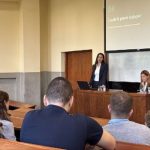
The first lecture, “Artificial Intelligence and the Legal Profession: Changes, Opportunities, and Responsibility”, examined how artificial intelligence is changing legal work, the skills required of lawyers and professional roles. Particular attention was given to accuracy, confidentiality, transparency and professional responsibility in the use of AI tools.
The second lecture, “Law in New Formats: AI Tools in Learning and Practice”, presented practical applications of AI in legal education and professional work. Students considered the use of AI to produce summaries, presentations, podcasts and videos, simulate client communication, structure case analysis and test legal arguments. The limits and reliability of these tools were examined at the same time.
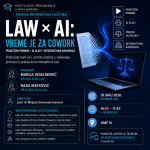
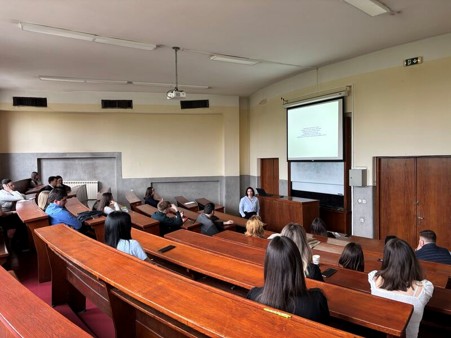
The programme was complemented by the guest lecture and interactive workshop “AI CoWork: Law in the Age of Artificial Intelligence”, held on 18 May 2026 in Amphitheatre IV within the Legal Informatics (Skills) course. Marija Veselinović, attorney-at-law, and Nada Matković, HR & L&D at Zunic Law, introduced the foundations of artificial intelligence, principles for designing effective prompts and the use of AI tools, including Claude, in legal research, the preparation of seminar papers and examinations, the analysis of legal cases, contracts and documents, and compliance work. Students then applied the tools in a practical group exercise based on a practice-oriented example. The speakers also presented Whisperly, a Zunic Law tool for automating compliance processes under the GDPR and the European Union Artificial Intelligence Act. The lecture connected the existing Legal Informatics teaching with content incorporated into the new “Digital Skills for Lawyers – Legal Tech” course.
The lectures connected practical Legal Tech competence with the wider relationship between the digital and green transitions. Digital technologies were considered as potential instruments for achieving climate neutrality, reducing pollution and restoring biodiversity, but also as technologies whose use requires legal, ethical and environmental assessment, including consideration of their energy, resource and environmental footprint.
The series of guest lectures and workshops formed a practical component of Legal Tech development within JMC EECL. Students gained experience in using digital tools while also assessing their reliability, legal consequences, professional risks and consistency with sustainability objectives.